
How to Deep Clean Your Fridge
Your fridge is one of the hardest-working appliances in your home, yet it’s often one of the most overlooked when it comes to deep cleaning. From lingering smells and hidden mould to sticky shelves and dirty condenser coils, a neglected fridge can affect food hygiene, efficiency and even your energy bills.
In this ultimate guide, we’ll show you how to deep clean your fridge properly. You’ll find a detailed step-by-step ‘how-to’, expert tips on different cleaning methods, advice on mould and stains, and answers to the most common fridge-cleaning FAQs. Whether you’re doing a quick wash fridge routine or a full deep clean fridge overhaul, this guide has you covered.

Step-by-Step Guide: How to Deep Clean Your Fridge
- Preparation
Before you start cleaning fridge interiors, preparation is key.
- Empty the fridge completely and check expiry dates
- Store food in a cool box or insulated bag if needed
- Remove shelves, drawers and door compartments
- Check the manual if you’re unsure how to clean fridge without turning it off (most deep cleans are best done with the fridge switched off)
Top tip: If you’re wondering how to clean fridge without turning it off, quick surface cleans are fine, but a true deep clean is safest and most effective with the power off.
- Clean the Removable Parts
Wash shelves and drawers separately using:
- Hot soapy water (washing-up liquid works well)
- A non-abrasive sponge or cloth
Allow glass shelves to reach room temperature before washing to prevent cracking.
- How to Clean Inside the Fridge
When deciding what to clean fridge with, choose gentle but effective solutions:
Hot soapy water
Great for everyday cleaning fridge tasks and greasy residue.
Baking soda solution
Mix 2 tablespoons of bicarbonate of soda with warm water. This is ideal for tackling fridge odours.
Lemon
This cuts grease and leaves a fresh scent.
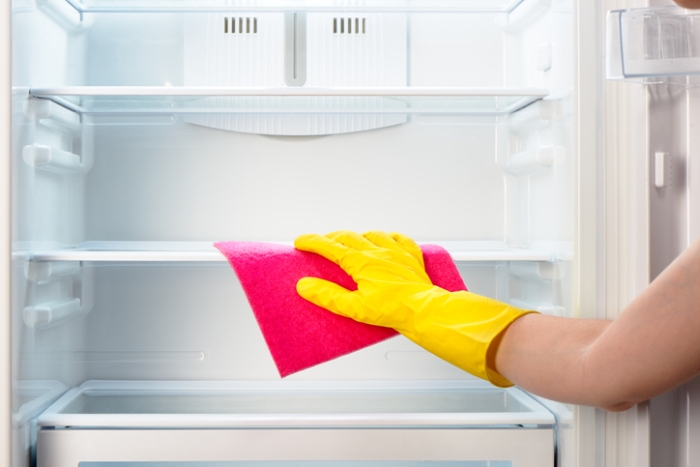
Wipe all interior surfaces, seals and corners thoroughly.
- How to Clean a Fridge That Smells
If you’re dealing with bad odours:
- Clean all surfaces with baking soda solution
- Check for hidden spills under drawers
- Leave an open bowl of bicarbonate of soda inside overnight
This is one of the best ways to clean fridge smells naturally.
- How to Clean the Fridge Drain Hole
A blocked drain hole can cause water pooling at the bottom of your fridge.
- Locate the drain hole at the back of the fridge interior
- Flush with warm water
- Use a pipe cleaner or cotton bud to remove debris
Regular maintenance helps prevent mould and bad smells. Many people ask how often should you clean your fridge drain hole, ideally every 1–3 months.
- How to Clean Mould in a Fridge
For anyone searching how to clean a mouldy fridge:
- Wear gloves
- Use a solution of white vinegar or baking soda and water
- Scrub gently, especially around seals and drain holes
- Dry thoroughly to prevent regrowth
Avoid bleach inside the fridge, as fumes can linger and contaminate food.
- How to Remove Stains
Stubborn stains can be tackled with:
- Baking soda paste (bicarbonate of soda and water)
- Leave for 10-15 minutes, then wipe away
- Repeat if necessary
This method is safe and effective for most fridge interiors.
- Cleaning the Fridge Exterior (Different Door Types)
Stainless steel fridge doors
If you’re researching how to clean fridge stainless steel:
- Use warm water and washing-up liquid
- Wipe in the direction of the grain
- Buff dry with a microfibre cloth
White fridge doors
- Hot soapy water
- Baking soda paste for scuffs
Black fridge doors
- Mild detergent only
- Avoid abrasive sponges to prevent dulling
- How to Clean Condenser Coils on a Fridge
Dirty coils reduce efficiency and can cause overheating.
- Unplug the fridge
- Locate coils at the back or underneath
- Use a vacuum or soft brush
- Clean every 6–12 months
If you’ve noticed higher energy bills or overheating, learning how to clean condenser coils fridge components is essential.
- Aftercare: After Cleaning Fridge, How Long to Wait?
Once everything is dry:
- Reassemble shelves and drawers
- Turn the fridge back on
- Wait 30-60 minutes before restocking
This answers the common question: after cleaning fridge how long to wait?
How Often Should You Clean Your Fridge?
Many people ask how often you should clean your fridge:
- Light clean: weekly wipe-downs
- Full interior clean: every 4-6 weeks
- Deep clean fridge (including coils): every 3–6 months
Regular care helps take care of fridge performance and hygiene.
Tools Needed for Cleaning a Fridge
- Microfibre cloths
- Non-abrasive sponge
- Baking soda
- Washing-up liquid
- White vinegar
- Soft brush or vacuum (for coils)
- Pipe cleaner (for drain hole)
FAQs:
Why does the drain hole in my fridge keep filling with water?
It’s usually blocked by food debris or ice. Regular cleaning prevents water build-up.
Can you use Fairy Liquid to clean a fridge?
Yes. Washing-up liquid is safe for general cleaning fridge tasks when diluted properly.
How to get rid of black mould in a fridge drain hole?
Flush with warm water and vinegar, then scrub gently with a pipe cleaner.
What is the best thing to clean the inside of a refrigerator with?
Baking soda and warm water is one of the safest and most effective options.
What not to do when cleaning the fridge?
Avoid bleach, abrasive pads, and strong chemical sprays inside the fridge.
Can I use bicarbonate of soda to clean my fridge?
Yes. It’s excellent for stains, smells and general cleaning.
How often should I clean my fridge drain hole?
Every 1–3 months, or more often if you notice water pooling.
Can I use washing-up liquid to clean my fridge?
Yes, it’s ideal for everyday cleaning when rinsed thoroughly.
Is vinegar good for cleaning the fridge?
Yes, especially for mould and odours, but use sparingly.
What are the symptoms of dirty fridge coils?
Overheating, louder running, poor cooling and higher energy bills.
What spray can I use to clean the inside of fridge?
Use food-safe sprays or homemade solutions like baking soda and water.
How to get rid of bad smell from fridge?
Deep clean all surfaces and leave bicarbonate of soda inside overnight.
When to Call the Professionals
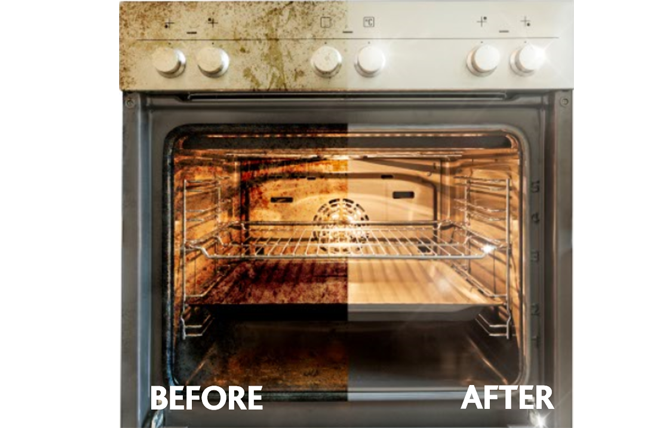
While regular home cleaning is essential, some appliances benefit from expert care. If grease, grime and odours have built up beyond what DIY methods can handle, professional cleaning can restore hygiene and efficiency.
Ovenclean specialises in deep cleaning ovens to a professional standard, helping you maintain a cleaner, healthier home with minimal effort.
Book your oven clean today and let the experts take care of the toughest kitchen cleaning jobs, so you don’t have to.